
Why Is My Roof Leaking During Heavy Rain?
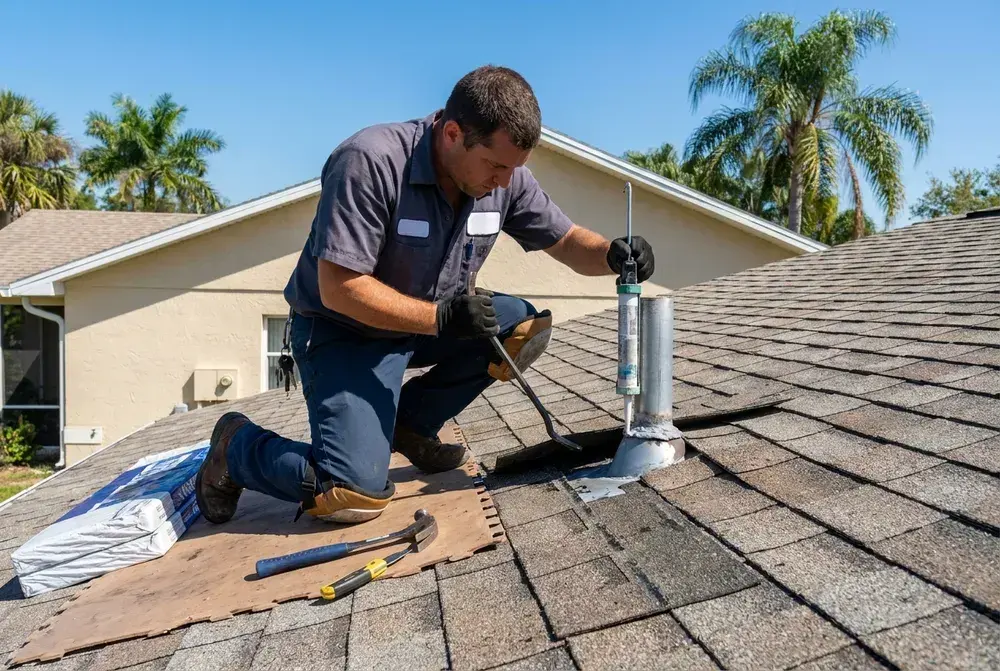
A roof almost always leaks in heavy rain because wind-driven water finds a flashing gap, a dried-out pipe boot, or a debris-clogged valley that light rain never reaches. The roof is rarely new or badly built. A marginal seal just needs enough rain, at the right wind angle, to get through. A fast inspection finds the real source before it spreads.
Why does my roof only leak when it rains hard?
Light rain falls mostly straight down and rarely finds a small gap. Heavy rain is different. The Florida Building Code sets wind speed maps for Volusia County. They run from 130 to 140 mph. The higher number is for homes near the coast, and homes within a mile of the coast sit in a wind-borne debris region. Roofs here are built and nailed for those wind speeds. So it takes real wind-driven rain, not a light shower, to push water sideways. That water sneaks into a flashing seam or pipe boot that straight-down rain never reaches.
Hurricane Ian is a clear example. In September 2022, it dropped 16.38 to 16.59 inches of rain on Ormond Beach gauges, more than the 13.14 inches recorded at Daytona Beach International Airport, according to the National Weather Service in Melbourne. Sixteen-plus inches of wind-driven rain in one event will find every aged pipe boot, lifted shingle, and rusted flashing seam on a roof. Ormond Beach homeowners saw exactly that kind of test during Ian.
What roof problems actually let heavy rain in?
A handful of spots cause almost every heavy-rain leak:
- Flashing around chimneys, vents, and skylights. This thin metal seals the joint where a roof surface meets something that pokes through it. Once it rusts, cracks, or pulls loose, it is the first place wind-driven rain gets in.
- Pipe boots. These are the rubber collars around plumbing vent pipes. Florida sun dries them out and cracks them faster than most parts of the country, and a cracked boot is a direct path for water.
- Open or debris-filled valleys. The V-shaped channel where two roof slopes meet carries the most water on the roof. Leaves and debris sitting there for a season can dam that flow and push water under the shingles.
- Cracked, missing, or lifted shingles. Once a shingle is gone or curled up, the layer under it is exposed to every storm that follows.
The median Port Orange home was built in 1990, and about 66% of the city's housing predates 2000, per Census data. Most roofs on this coast are 25 to 45 years old. Many are on their second roof. By then the flashing and pipe boots have often worn out, even when the shingles above them still look fine.
Is a roof leak during a storm an emergency?
It can be. Water spreads fast once it gets past the roof deck, soaking insulation, ceilings, and walls within hours. Our roof repair team treats an active leak as urgent, and for storm-driven damage our storm damage roof repair crew runs 24/7 and often reaches a home within 15 minutes. A fast response is the difference between drying out a ceiling patch and replacing a section of wood deck.
Need help with a leak right now? Call Certified Construction and we will get a crew moving.
What should I do the moment my roof starts leaking?
- Stay safe first. Keep off a wet roof and away from any downed power lines.
- Contain the water inside. Move furniture and valuables, and set out a bucket or tarp under the drip.
- Call a roofer right away, even if the storm is still going. Early scheduling matters.
- Document the damage. If you plan to file with your own insurer, clear photos help. A written estimate backs up what you find. The claim and the policy stay between you and your insurance company; our job is a dry, sealed roof either way.
- Get a full inspection once it is safe, so the crew finds the true source of the leak, which is often uphill from the wet spot on your ceiling.
How much does fixing a storm-triggered leak cost?
As of 2026, a typical Florida roof repair for a minor leak patch, a shingle swap, or a flashing repair runs about $600 to $1,800, according to published Florida roofing cost guides. This is market framing, not a quote. Your real price depends on a few things: how much of the roof is wet, how many shingles or flashing pieces need swapping, how steep and easy to reach the roof is, and whether the wood deck underneath is soft and needs rebuilding first. Every job starts with a free, written estimate before any work begins, so you know the real number for your roof.
How do you stop it from happening again?
The fix is not just patching the hole. A proper repair finds the true source of the leak, pulls back the damaged area, checks the deck and underlayment, and rebuilds it in layers the way it was meant to go on. Certified Construction has repaired coastal roofs since 1984, more than 40 years on the Volusia coast. Johnny Puccio is a Florida Certified Roofing Contractor under license CCC1330932, a GAF Certified Contractor, and a CertainTeed ShingleMaster. Every repair is backed by the company's own 6-year labor warranty, separate from the 25-year manufacturer warranty that applies to new roof installs.
The Atlantic hurricane season runs June 1 through November 30, per NOAA's National Hurricane Center, the same stretch the company treats as its own storm season. Checking flashing and pipe boots before that window opens catches a weak spot while it is still a small, cheap fix instead of a mid-storm emergency. For a deeper look at what drives repair pricing on this coast, see typical roof repair costs in Florida.
If your roof is leaking right now, or you want it checked before the next storm, contact Certified Construction for a free inspection and written estimate.
Talk to Certified Construction
Questions about your roofing job? We serve Port Orange and the surrounding area with honest, upfront advice.
Related articles
FAQ
Related questions
Can a roof in good condition still leak during a hurricane?
Yes. A roof that looks fine from the ground can still have one worn flashing seam or dried-out pipe boot. Normal rain never tests that spot. Wind-driven rain during a named storm pushes water sideways into gaps that straight-down rain never reaches, so even a decent roof can leak once in a while.
Should I wait until the storm passes to call a roofer?
No. Call as soon as you see water coming in. You should stay off the roof and away from downed power lines until it is safe, but you can call right away. Getting someone scheduled early, and adding temporary protection where it is safe to do so, keeps a small leak from turning into a bigger repair.
Does a roof leak during a storm mean I need a full replacement?
Usually not. Most storm leaks trace back to one failed flashing seam, pipe boot, or a few lifted shingles, which is a repair, not a replacement. A full inspection tells you for sure. If the damage reaches the wood deck in several spots or covers a large part of the roof, a repair can grow into a bigger job.