
What Drives Commercial Flat Roof Cost in 2026?
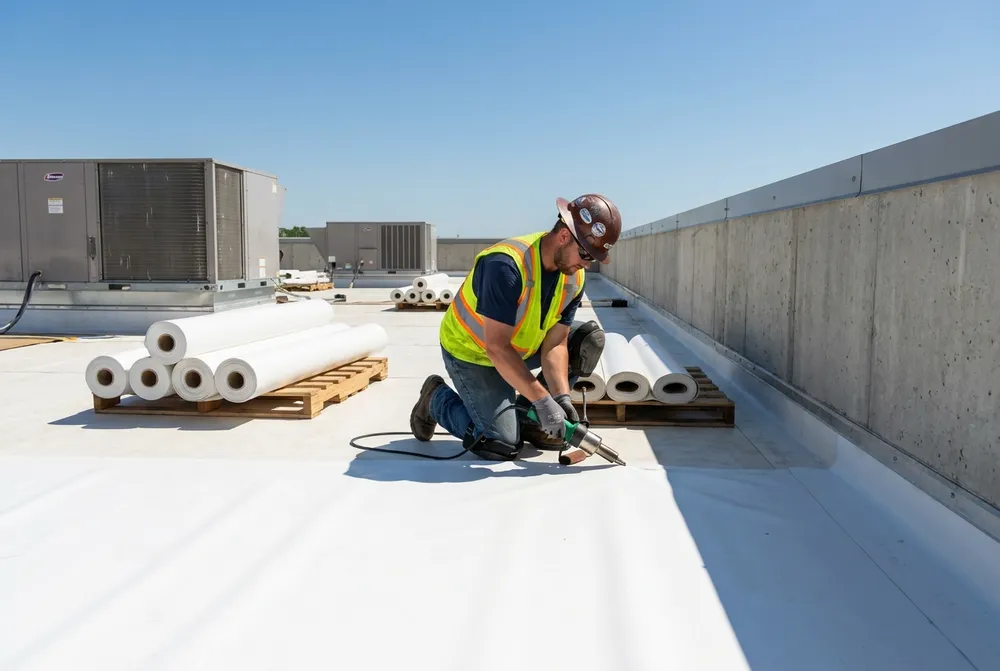
A commercial flat roof replacement in 2026 typically costs $4 to $9 per square foot for TPO. Modified bitumen runs $4 to $8 per square foot. Both figures come from published 2026 market cost guides. A full building often lands near $20,000 to $75,000. Square footage, membrane choice, roof access, and drain count set your real price. Certified Construction walks your roof and gives a free written estimate before any work starts.
Call Certified Construction at (386) 423-0404 for a free estimate on our commercial and flat roofing service.
What does a commercial flat roof cost in 2026?
As of 2026, published market cost guides put TPO membrane roofing at $4 to $9 per square foot installed. Modified bitumen runs $4 to $8 per square foot installed. For a full building, that works out to roughly $20,000 to $75,000 on a mid-size commercial roof. A small shop costs far less. A large flat-roof warehouse costs more. These are typical market ranges. They are not a quote. Certified Construction bids every commercial roof on its own after walking it. Your real price comes in writing before any work starts.
What drives the price up or down?
Certified Construction names five real cost drivers on every commercial flat roof job. Total roof square footage sets the base price. A bigger roof costs more to cover, plain and simple. The membrane system you pick changes the material and labor cost too. TPO, modified bitumen, and single-ply each price out a little differently. Roof access and building height matter next. A taller or harder-to-reach building takes the crew more time to work safely. Whether the crew tears off the old roof or recovers over it changes the labor and disposal cost as well. A tear-off means hauling away the old material. A recover job builds over it instead, when the deck allows. Last, the number of rooftop penetrations and drains adds up. Each pipe, vent, and drain needs its own flashing and sealing work. A free, written estimate lays out every one of these so your price is clear before work starts.
TPO or modified bitumen: which should you pick?
TPO is a single-ply membrane. Crews weld it at the seams for a tight, sealed surface. It reflects heat well, which can help lower cooling costs on a sun-exposed roof. Modified bitumen is a tough, layered asphalt system instead. It builds up in sheets for extra puncture resistance. Certified Construction's crew inspects your deck first for soft or wet spots. From there the crew decides on a tear-off or a recover, then lays the membrane and welds every seam. The crew sets flashing at each drain and penetration, and tests the seams before leaving. The right system depends on your roof's use, your budget, and how your building is built. There is no single right answer for every building.
Why does ponding water matter so much on a flat roof?
The Florida Building Code has a clear rule here. Any water still standing on a roof 48 hours after rain stops is ponding water. The code treats it as a structural hazard, not just an eyesore. Low-slope membrane systems like TPO and modified bitumen carry a minimum 1/4:12 design slope for drainage. A building also needs backup emergency drains or scuppers. They catch the water when the main drains clog and the perimeter walls could trap it. This is exactly why Certified Construction names ponding water, failed seams, and pulled-away flashing as the three most common sources of a flat roof leak. Drain count and placement are a real design and cost factor on a flat roof job. They are not an afterthought.
Do you need a permit for a commercial roof job in Port Orange?
Yes. The City of Port Orange charges a New Roof/Re-Roof permit fee of $125 or $4.00 per square, whichever is greater. Re-inspection fees apply if a job fails inspection. For TPO, modified bitumen, and other membrane systems, the city's Building Division also requires a Product Approvals Specification Sheet. That sheet lists each component's Florida approval number and design pressure in PSF. The sheet and the manufacturer's installation instructions must be on site at inspection. Certified Construction handles this paperwork as part of the job. The company is a GAF Certified Contractor, licensed, insured, and bonded under Florida license CCC1330932.
Who is doing the work on your roof?
Certified Construction has roofed the Volusia coast since 1984. The company is family owned, not a subcontractor crew hired for one job. Owner Johnny Puccio is a Florida Certified Roofing Contractor and a CertainTeed ShingleMaster, on top of the company's GAF Certified Contractor status. Every commercial job is backed by a 25-year manufacturer material and labor warranty, the same warranty the company stands behind on residential work. You are paying for more than the membrane itself. You also get a certified crew, a real license number, and a long warranty.
Ready to get your real number? Contact Certified Construction for a free walk and written estimate, or ask about a roof inspection, a smaller repair job, or our metal and tile roofing guide if your building has a steeper roof section too.
Talk to Certified Construction
Questions about your roofing job? We serve Port Orange and the surrounding area with honest, upfront advice.
Related articles
FAQ
Related questions
What is the difference between a roof tear-off and a recover job?
A tear-off removes the old roof down to the deck before the new membrane goes on. A recover job builds the new membrane over the old roof, if the deck and old surface are sound enough to carry it. Certified Construction inspects the deck first and tells you honestly which option your building needs.
What wind rating does a commercial roof need on the Volusia coast?
Volusia County's wind speed map runs 130 to 140 mph design wind speeds, with the 140 mph band along the coastal strip. Land within a mile of the coastal mean high water line is also a wind-borne debris region. Your membrane, fasteners, and flashing all have to be rated and installed to match your building's mapped wind speed.
How long is Certified Construction's roof warranty?
Certified Construction backs commercial roofing work with the same 25-year manufacturer material and labor warranty the company stands behind on every job. Your exact warranty terms go in writing with your estimate.